Dealing with Missing Values
A common and crucial preprocessing step in data analytics is dealing with missing values. These gaps in the data can arise due to various reasons, such as technical glitches or human errors during data collection. Addressing the missing value problem involves making decisions that balance acquiring useful information from incomplete observations and potentially introducing bias into the dataset. Properly handling missing values ensures the integrity and reliability of the analysis, helping to draw accurate and meaningful insights.
First, here is how we may be able to identify missing data
library(tidyverse)

ames <- as_tibble(read.csv("Datasets/ames.csv"))
sum(is.na(ames))
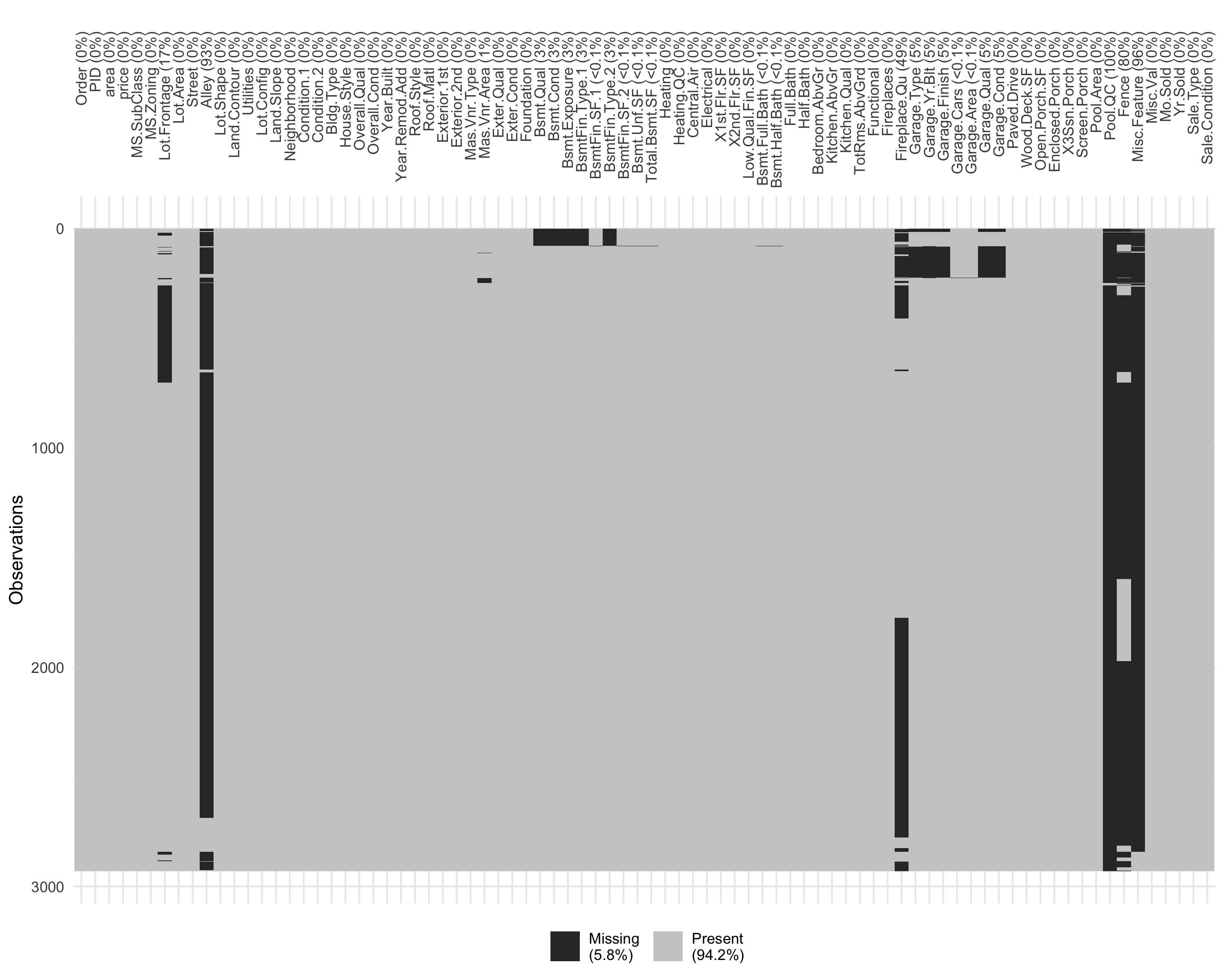
ames %>% summarise_all(~sum(is.na(.))) %>% glimpse()We can also visualize missing values at the feature/column level. A package
library(visdat)
vis_miss(ames, cluster = TRUE)